11
11
By Rob Hill
Yunus Chkirate’s work possesses that rare quality that great art often carries. They do not simply ask to be viewed. They ask to be felt. There is longing in them. A feeling that shifts into desire, then beauty, then grief, then joy, right before my eyes. A tenderness that feels both deeply personal and strangely universal.
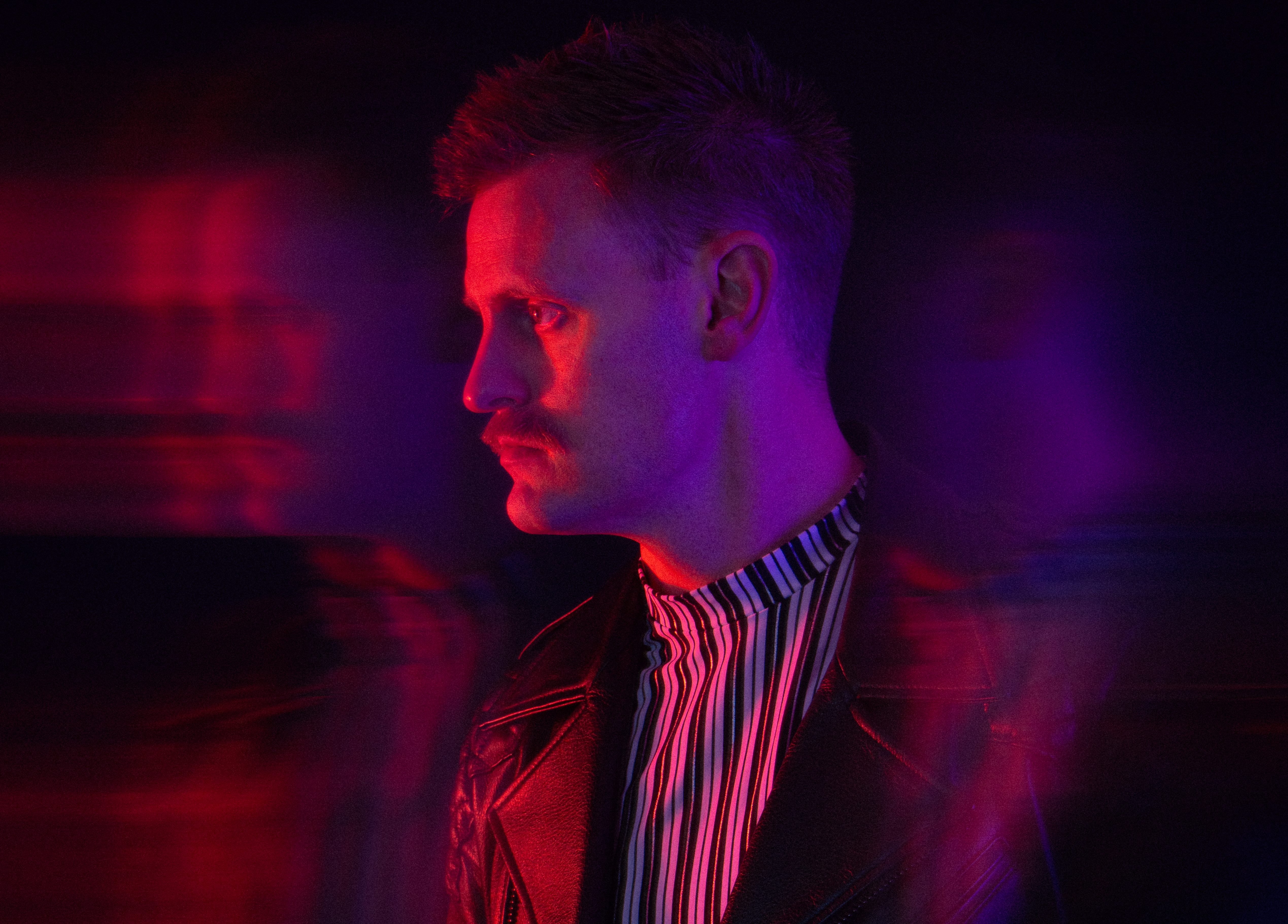
Then I met Yunus… handsome in the truest sense of the word. The kind of handsome that has very little to do with appearance and everything to do with spirit. His work makes more sense once you meet him. The same vulnerability that exists in his paintings exists within the man himself. The same honesty and the same willingness to explore the parts of himself that many people spend a lifetime avoiding.
Based in San Francisco and originally from Montreal, Yunus Chkirate is an Italian-Moroccan artist whose work lives at the intersection of beauty, vulnerability, and emotional truth. Influenced by a background in fashion and a lifelong connection to creativity, Yunus creates deeply personal paintings that explore love, loss, identity, and self-discovery. What began as a form of self-care eventually became a calling, transforming heartbreak into a body of work that is both intimate and universal. Through color, texture, and instinct, Yunus invites viewers into a world where emotion takes center stage, and art becomes a mirror for the human experience.
For Yunus, art was not something that arrived suddenly. It had always been there, quietly waiting. Long before gallery walls and exhibitions, there was a child sketching portraits of his mother with a pencil. There were afternoons spent in her sewing room creating dolls from fabric scraps. There was an early fascination with color, texture, and storytelling. Creativity was never absent from his life; it simply changed forms.
A career in fashion offered an outlet for that creativity… styling, merchandising, visual presentation. Yet something remained unfinished. Fashion gave Yunus a playground, but art offered him freedom.
“I craved a space where an idea could be pushed to its absolute limit without boundaries or corporate limitations,” he tells me.
Still, there is often a defining moment in every artist’s life. A moment when creativity stops being a hobby and becomes something deeper. For Yunus, that moment arrived through heartbreak. The end of his first great love left him devastated. Like many of us, he found himself searching for a way to process grief that words alone could not contain, so he turned to painting.
What happened next changed everything.
Painting stopped being a weekend ritual. It stopped being self-care. It stopped being an escape. Instead, it became a direct line between his emotions and the canvas. Pain became color. Loss became movement, and grief became something tangible.
“That heartbreak was the crucible that turned me into an artist,” he says. Listening to him speak, it becomes clear that art did not save him from heartbreak. “Art taught me how to survive it.”
Today, he describes painting as his emotional compass. A way of understanding what is happening inside himself when language falls short.
It is no longer something he does; it has become who he is. That realization did not arrive without its own challenges. Artists spend their lives creating work that asks others to look closely. The irony is that the process often requires them to examine themselves even more deeply. For Yunus, stepping fully into the identity of artist required radical honesty.
He remembers receiving his first business card with the word ARTIST printed beneath his name. He was twenty-four years old and the first time feeling true. Anything before that felt temporary, performative, he describes. Even though the business card made everything click, it also forced him to embrace that identity meant confronting himself in ways he never expected.
“You can’t create work of any real substance without confronting your most intimate fears and shadows,” he says. Because the truth is that meaningful art rarely comes from certainty. It comes from curiosity. Vulnerability. Questions without easy answers.
The deeper Yunus moved into his creative practice, the more he found himself questioning ideas he had inherited about success, productivity, and ambition.
Like many millennials, he grew up believing that hard work meant exhaustion. Long hours. Late nights and constant hustle. The creative life challenged that belief. Creativity, he learned, does not operate on a time clock.
“You cannot force inspiration to arrive at nine in the morning and stay until five. You can nurture it. You can create conditions for it but you cannot control it.”
Today, Yunus prioritizes rest, relationships and mental health. Not because he works less but because he works smarter. He understands that clarity is far more valuable than burnout. That same shift transformed the way he measures success. Coming from the fashion world, success had always been tied to numbers.
Then came his first solo exhibition and it sold out.
For many artists, that would be the dream. Yet the financial success was not what stayed with him. What mattered was witnessing strangers connect with something deeply personal, watching someone stand in front of a painting and see themselves reflected back. Watching art create conversation between people who may never meet.
“The red dots on the gallery wall can speak for themselves,” he says. “I’d rather talk about the human connection.” Perhaps that is why his work resonates so deeply. It is not trying to impress you. It is trying to connect with you. At the center of Yunus’ practice is presence. When he paints, the noise disappears. Every brushstroke becomes a decision, every color becomes instinct, and every moment becomes now. “It brings a profound, meditative stillness,” he says.
That stillness became especially important during the creation of one of his most personal projects, LOVER AND THE BEAST. The exhibition explored two opposing forces within himself. The Lover who is sensitive, emotional, and vulnerable. Then there’s The Beast who is impulsive, physical, and untamed.
Months of exploring those opposing energies demanded a level of honesty that few people ever allow themselves. Yet when the project was complete, something remarkable happened. Looking at those finished portraits, Yunus saw himself more clearly than ever before. Not just as a painter, not just as a creative, but as someone who had found his purpose.
And when you stand in front of a Yunus Chkirate painting, you can feel that truth staring back at you.
Some artists paint what they see. Others paint what they survive. Yunus Chkirate belongs to the latter.
Drawing from deeply personal experiences, Chkirate creates work that explores identity, emotion, transformation, and the complexities of the human condition. His paintings blur the line between strength and vulnerability, inviting viewers into intimate narratives that feel both deeply personal and universally relatable. Through recurring themes of love, loss, self-discovery, and healing, he transforms raw emotion into striking visual storytelling.
Every piece feels like an invitation to pause and reflect, to sit with the parts of ourselves we often overlook or conceal. His work reminds us that growth is rarely linear and that becoming who we are is often a messy, uncomfortable, and profoundly human journey. Yet within that tension, Chkirate uncovers beauty, resilience, and connection.
Through his art, Yunus Chkirate offers more than images. He offers a mirror, one that encourages us to embrace our complexities, honor our experiences, and find meaning in the process of becoming ourselves.
To explore more of his work, visit his website at www.yunuschkirate.com and follow him on Instagram at @yunuschkirate.