 11
11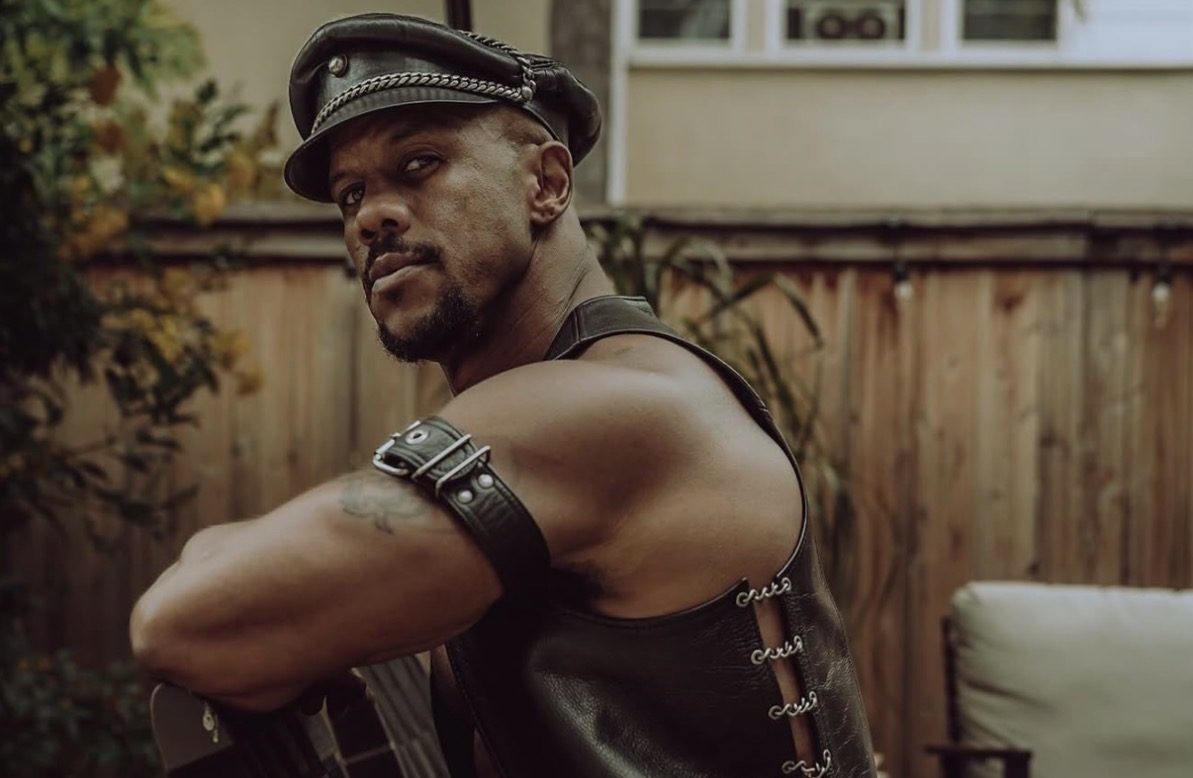
by Rob Hill
A playful yet devious smirk falls across Sterling Walker’s face as he remembers his first piece of leather clearly, even if the purchase itself arrived through a bit of New York nightlife haze.
He breaks it down for us. Sterling was at The Eagle in New York City, feeling good, moving through the night with the kind of looseness that makes the body say yes before the mind catches up. Somewhere inside the store, he picked up a brown harness and a boy cap. At the time, he did not know the language for all of it. He only knew how it felt.
“I remember putting it on and thinking, holy shit, this looks good,” Sterling says. “It felt good on my body. I was drawn to how it shaped my muscles. It instantly made me feel good.”
The next morning, he woke up with the harness, the cap, and a question. “What just happened?” That moment became the beginning of something much deeper than gear.
For Sterling Walker, a Marriage and Family Therapist, LMFT, and a prominent member of the leather community, leather is not just aesthetic. It is identification. It is a community. It is a signal to others who understand desire, sexuality, freedom, and belonging in similar ways.
“The leather and the gear are just the aesthetic,” he says. “It is how we identify each other.” But confidence, for Sterling, comes from the people around it. The ones who support him. The ones who see him. The ones who understand that leather can be both erotic and emotional, both powerful and deeply human.
As a Black man in leather spaces, Sterling is honest about the complexity of being seen. His experience has been positive overall, but he does not romanticize it. He acknowledges the privilege that can come with body, beauty, and desirability, even within communities that often imagine themselves outside mainstream rules.
“There is privilege in all communities,” he says. “I acknowledge that there are certain privileges I hold that can make my experience more accessible.”
Still, being desired is not the same as being known.
Sometimes, Sterling says, people see the exterior. The leather. The body. The sexual fantasy. What they miss are the softer pieces. His sensitivity. His spirituality. His cultural experience. The deeper parts of the man working every day to remain connected to himself and to others.
“There are aspects of me that sometimes are not seen in ways that feel fulfilling or genuine to my person,” he says. That is where the conversation turns. Because for Sterling, visibility is not simply about being noticed. It is about being recognized fully.
He feels most seen when someone tells him that his openness has helped them feel more secure in their own leather or kink journey. He feels seen when people trust him to walk beside them, not above them, as a companion, guide, or fellow traveler in a world that can feel intimidating to enter.
“I feel seen when people trust me to be with them,” he says. “Engaging in their journey of leather.”
Service sits at the center of Sterling’s work. Not just professionally as a therapist, but personally as a man who understands what it means to create tables when one is not already waiting for you.
“For me, it always comes from a place of passion and service,” he says. “I love people. I think people are fascinating and unique and interesting.”
That love shows up in the way he talks about community. The way he talks about helping people feel authentic, comfortable, and true. The way he talks about giving back is because he knows what it feels like to not always have access to those feelings himself.
Sobriety, leather, service, and self-discovery have all shaped how Sterling sees himself today. “I see myself today as a service worker,” he says. “As a person who has a life of leaning into purpose.”
That purpose is clear. Sterling wants to help people liberate themselves from fear, doubt, and insecurity. He does that by sharing his own experience, by creating spaces for people to gather, and by reminding others that belonging is not always something we wait to receive. Sometimes it is something we help build.
When asked what advice he would give to someone entering leather spaces who feels invisible, his answer is simple but layered.
Come with an open heart. Come with a willingness to participate. Come with your gifts.
“If you engage with community from an open heart, from a place of service, and share your gifts and talents with others, that is the quickest way to be part of something greater than yourself,” he says.
For Sterling, belonging is not about walking into a room and asking why no one has made space for you. It is about entering with intention and asking what you can bring.
A skill. A hand. A welcome. A contribution. “You are introducing yourself from a place of, I am willing to share my gifts and talents with others,” he says. “People will see you.”
And maybe that is the real leather lesson Sterling offers. Not just how to be seen in the harness, the boots, the cap, or the room. But how to be seen in fullness.
For Sterling, the future of leather spaces is not built through exclusivity or performance. It is built through openness, service, and people willing to show up fully as themselves. As our coffee cups emptied and the conversation slowed, one thing became undeniably clear: Sterling is not simply creating space for himself. He is holding the door open for others, too.
And perhaps that is the real power of being seen.
Not validation. Not attention. Not desire alone. But the ability to walk into a room exactly as you are and trust that there is space for your full humanity there. Your softness. Your culture. Your sensitivity. Your healing. Your joy.
For the next Black man entering these spaces, wondering if he belongs, Sterling’s message feels simple: you do. Bring your heart. Bring your gifts. Bring yourself. The right community will not just make room for you. It will grow because you arrived.
Photos Credit: @Erotiese



GREAT ARTICULE!
Such a thoughtful perspective into the journey of self discovery and exploration.
Making and holding space are such integral parts of building community.
Great read. Thank you